25 rubles — Russian Empire (1803–1811) — Napoleonic forgery
Pick# A10
Log in to share a photo
Watermark
There is no watermark photo yet. Share a watermark photo
Assignats of 1786–1818
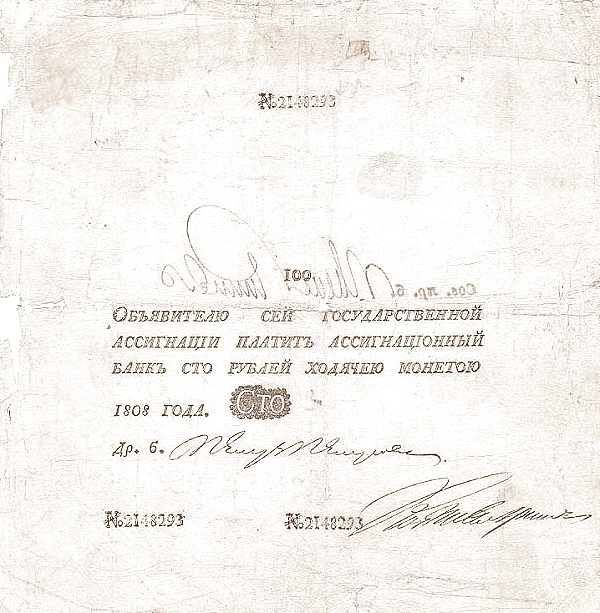
The second-type assignats were issued in 1785–1787 to replace the old notes, many of which had been forged: the same design on coloured paper from a special mill in Tsarskoye Selo; the exchange ran from 1 September 1786 to 1 July 1787. The notes were printed unchanged until 1818, each with its year. The reform of 1802–1803 planned a mass exchange of assignats for new notes of 5, 10, 25 and 100 roubles, but remained at the stage of trials, which are kept in the Goznak museum. The Napoleonic forgeries are shown separately: they were made in France to weaken Russian finances, on better paper than the genuine notes, sometimes with a spelling mistake in a word, with facsimile signatures. The 25 and 50 roubles were forged most often.
Appearance
A Napoleonic forgery of the second-type 25-rouble assignat: the design and text are the same as on the genuine note, but on embossed paper of better quality; the words "государственной" and "ходячею" sometimes carry a mistake ("л" instead of "д") and the signatures are facsimiles. Size 134 × 173 mm; dated 1803, 1810 and 1811. Not a bank issue.
Specifications
- Period
- Assignats
- Currency
- 1 ruble = 100 kopecks
- Issue type
- Circulation
- Material
- Paper
- Size
- 134.0 × 173.0 mm
- Watermark
- Yes
- Security thread
- No
Other items of the period
-
5 rubles (1786–1818)
Pick# A8
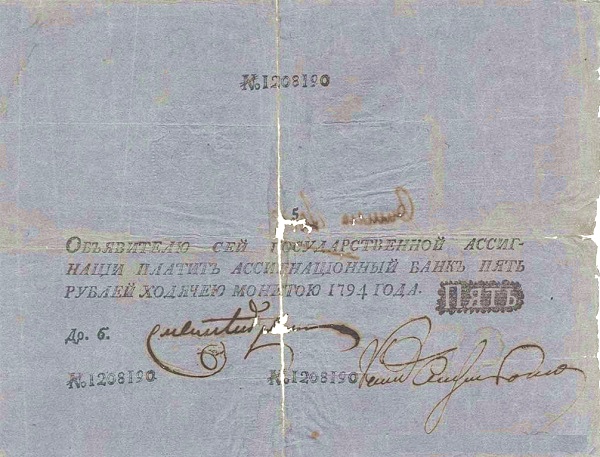
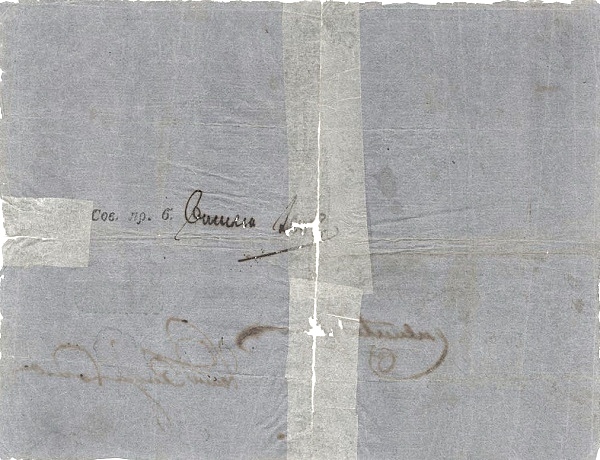
- 5 rubles (1802) — Unissued Pick# A13
-
10 rubles (1786–1818)
Pick# A9
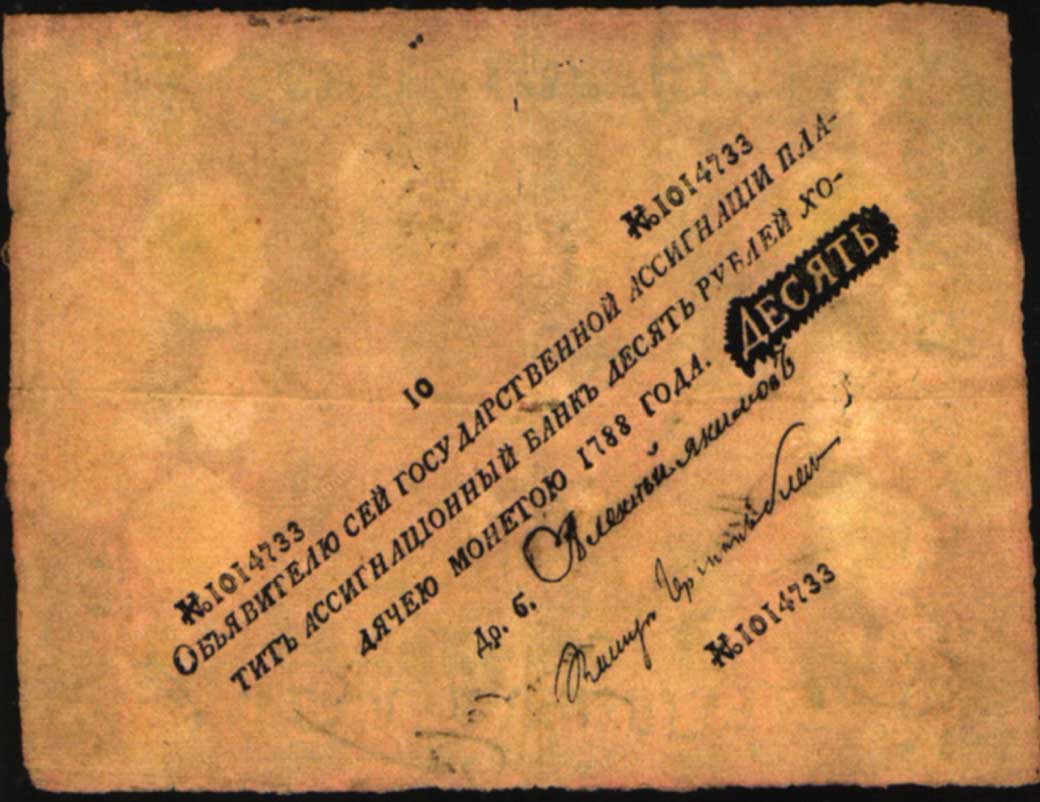
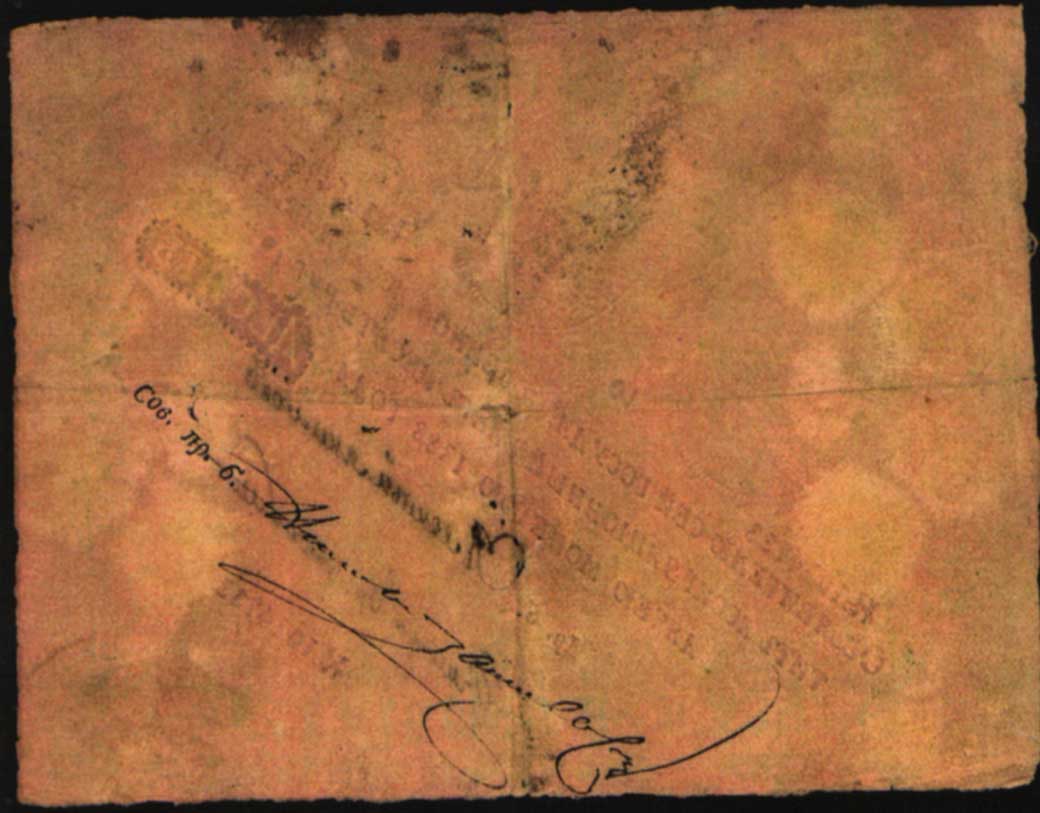
- 10 rubles (1802–1803) — Unissued Pick# A14
-
25 rubles (1785–1818)
Pick# A10
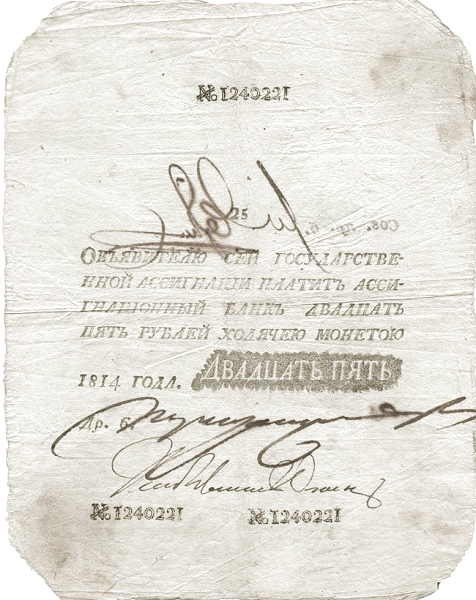
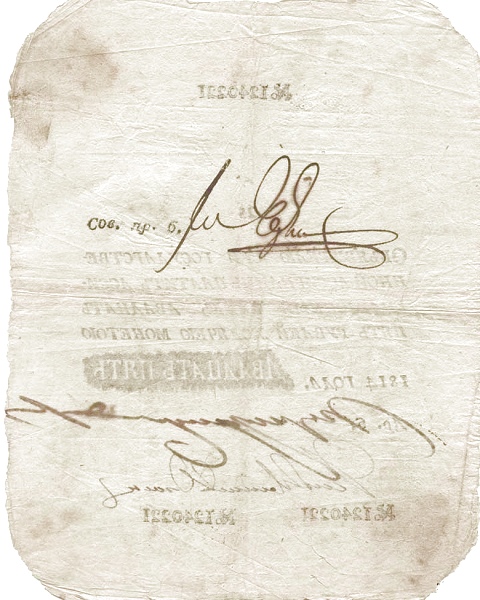
-
25 rubles (1802) — Unissued
Pick# A15
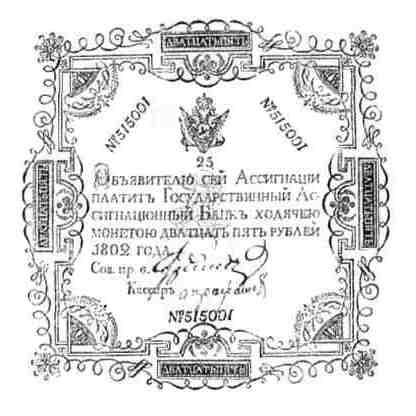
- 25 rubles (1803–1811) — Napoleonic forgery Pick# A10
-
50 rubles (1785–1818)
Pick# A11
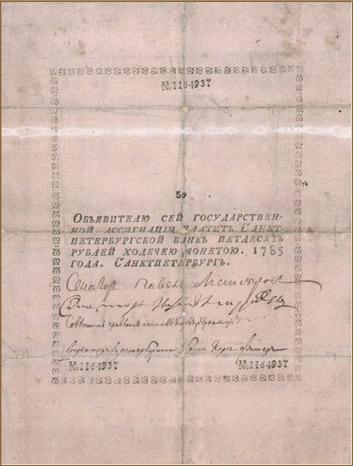
- 50 rubles (1805–1808) — Napoleonic forgery Pick# A11
-
100 rubles (1785–1818)
Pick# A12
- 100 rubles (1802) — Unissued Pick# A16
Report an error
Suggest an edit
Log in to suggest an edit. Log in