← Russia (group) · Russian Empire

Russian Empire — Alexander II (1855 — 1881)
The coins of Alexander II belong to the time when small change got cheaper: after the Crimean War silver was leaving circulation, and the fineness of the small silver was lowered first to .750 and in 1867 to .500. The 1867 designs — small silver from 5 to 20 kopecks and copper from 1 to 5 kopecks — were struck unchanged until 1917.
The first years used the designs of Nicholas I: .868 silver, the gold 5 roubles and copper of the 1849 pattern. In 1859 the rouble, poltina and 25 kopecks of a new design in .868 silver and the gold 5 roubles of .917 fineness came out, and the gold 3 roubles were added in 1869; these coins were struck under Alexander III too, until 1885.
In 1859 a 15-kopeck coin appeared, and from 1860 all the small change from 5 to 20 kopecks was struck in .750 silver; part of the 10 and 15-kopeck coins of 1861 was struck in France, in Paris and Strasbourg. Under the 1867 designs the 5, 10, 15 and 20 kopecks were made of .500 silver, and the copper from 1 to 5 kopecks became one and a half times lighter; the ¼ and ½ kopecks received the emperor's monogram. The Warsaw Mint stopped striking Russian copper in 1864, the Ekaterinburg Mint closed in 1876 — from then until the end of the reign all the coins were struck at the Saint Petersburg Mint.
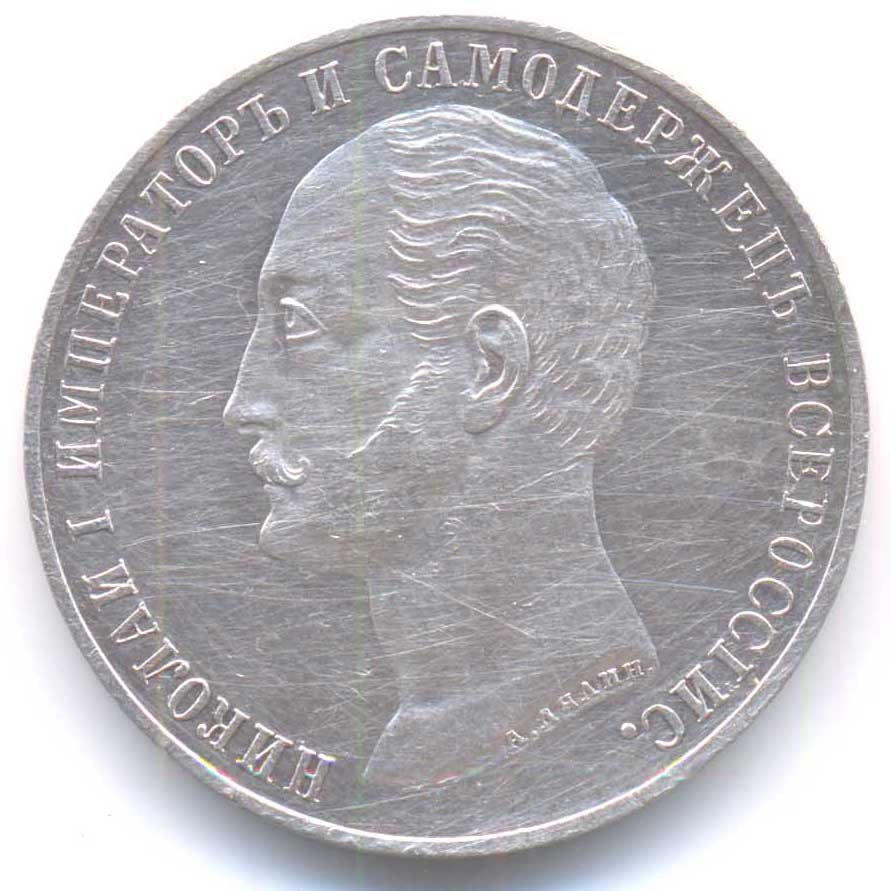
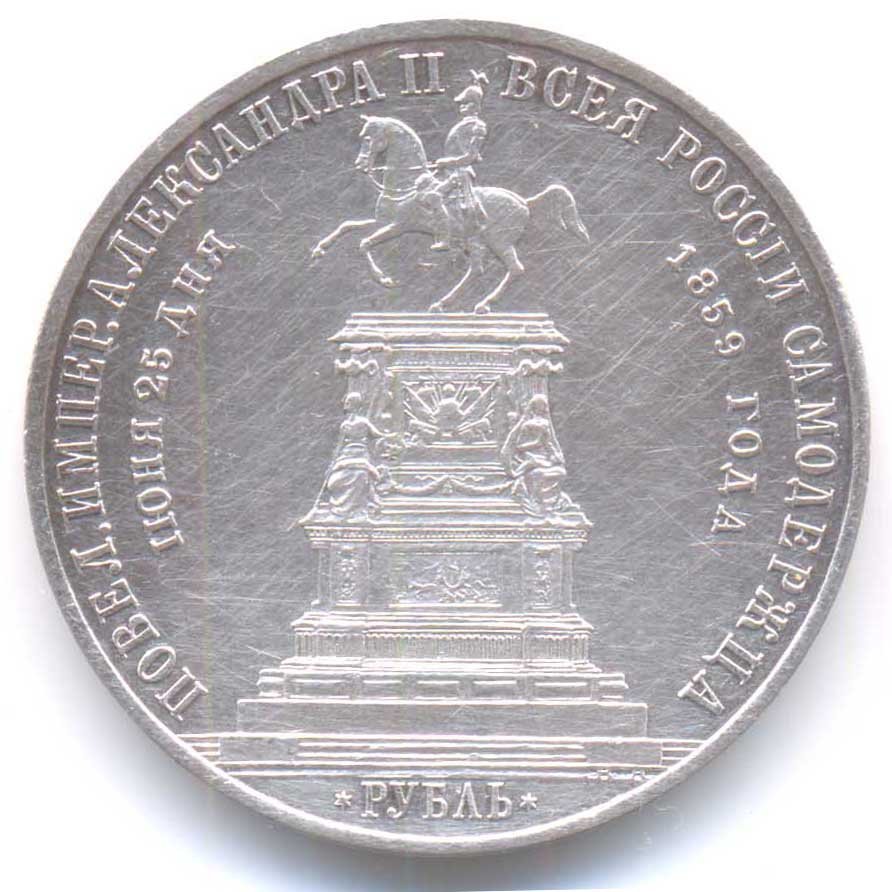
There are two commemorative coins of Alexander II: the rouble of 1859 for the unveiling of the monument to Nicholas I in Saint Petersburg and the gold 25 roubles of 1876, struck in just one hundred pieces.
|
1 ruble — Russian Empire (1859) — Unveiling of the Nicholas I monument in Saint Petersburg
Y# 28 Silver 868, 20.73 g, ⌀ 35.5 mm |
+ |
|
25 rubles — Russian Empire (1876) — 30th birthday of Grand Duke Vladimir Alexandrovich
Y# 27 Gold 917, 32.72 g, ⌀ 32.3 mm |
+ |
Could not find the item? Add it to the catalog