The interregnum
On 19 November 1825 Alexander I died in Taganrog. He had no sons, and by law the throne passed to his next brother, Grand Duke Constantine Pavlovich, who lived in Warsaw. News of the emperor’s death reached St Petersburg on 27 November, and the capital swore allegiance to Constantine. But he had renounced the throne several years earlier — something few people knew. Constantine did not accept the crown, yet did not announce a new abdication straight away either. For almost a month the country had an emperor who did not reign. Only in mid-December did Nicholas I ascend the throne.
A rouble for the new reign
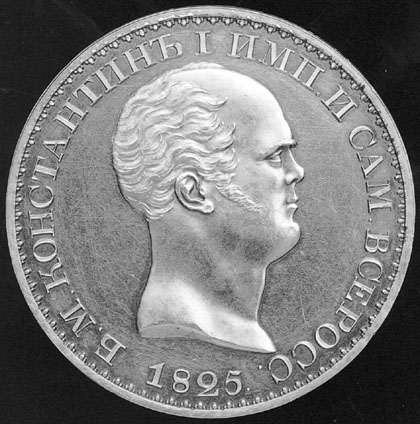
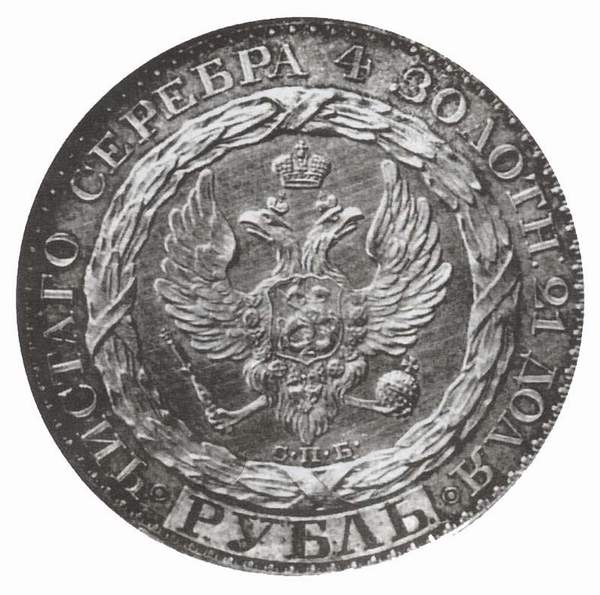
While letters went back and forth between St Petersburg and Warsaw, Finance Minister Yegor Kankrin ordered a coin for the new reign. The dies were cut by Yakov Reichel, medallist of the St Petersburg Mint — apparently with assistants, as there were only about two and a half weeks for the work. The coin shows Constantine’s profile.
Only a few trial roubles were struck in time. Sources disagree on exactly how many and of which kinds: most often they name five coins with a lettered edge and three with a plain one.
The packet in the archive
Once it was clear that Nicholas would be emperor, the work stopped. The trial coins and dies went into a sealed packet in the archive of the Ministry of Finance — and were forgotten for a long time. The packet was opened only in 1879: the historian Dmitry Kobeko found six dies, tin impressions, a drawing and five coins inside, and in 1880 described the find in the journal Russkaya Starina.
How many exist
There is no exact count: most tallies give eight genuine coins. Three are in museums — the Hermitage, the State Historical Museum and the Smithsonian Institution in Washington — and the rest are in private collections. Every sale at auction is an event.
Later a few restrikes were made from the genuine dies. And in Paris copies were struck and passed off as genuine coins — they are called “Trubetskoy roubles”, after the prince who sold them. Collectors still argue about them.
The roubles people actually used
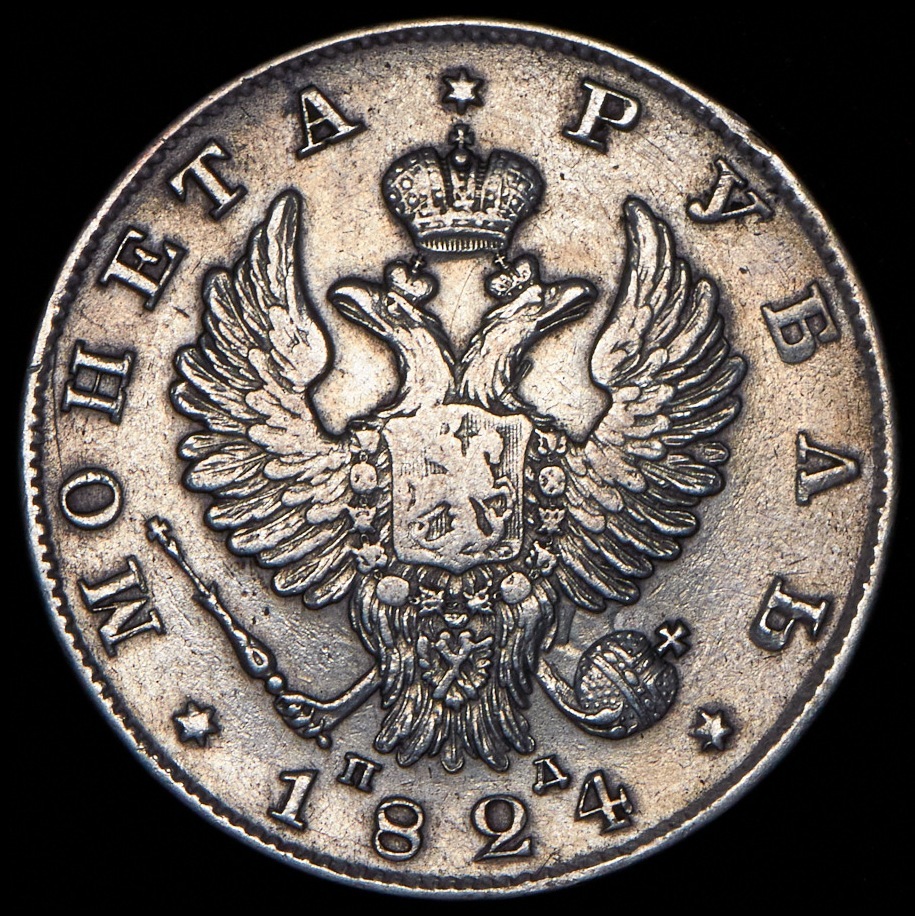
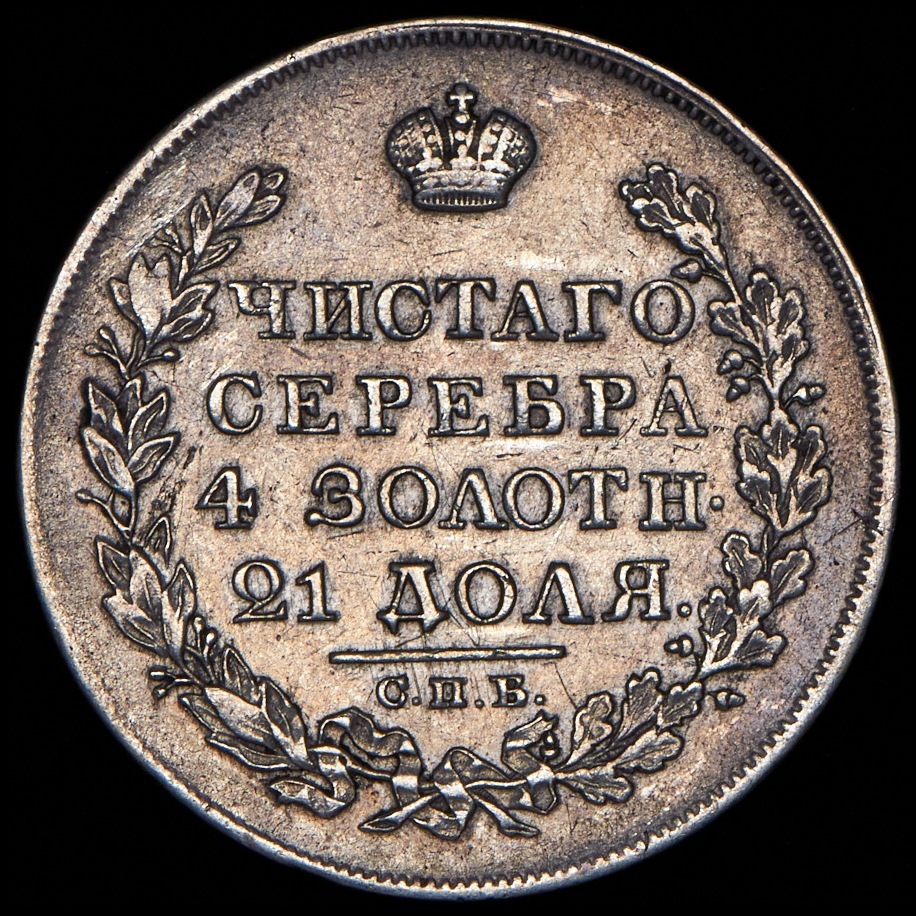
In 1825 the rouble in circulation was the ordinary one with the coat of arms and no portrait. The same design continued to be struck after Nicholas I came to the throne.