

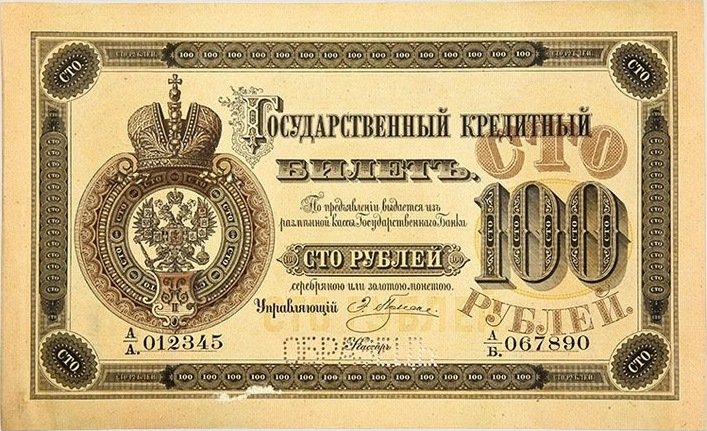
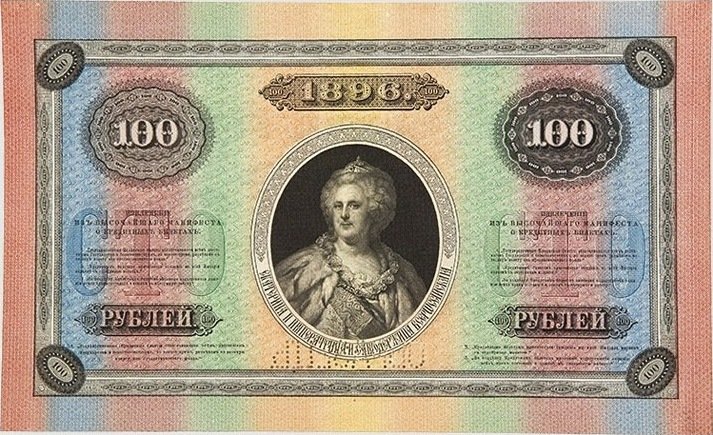
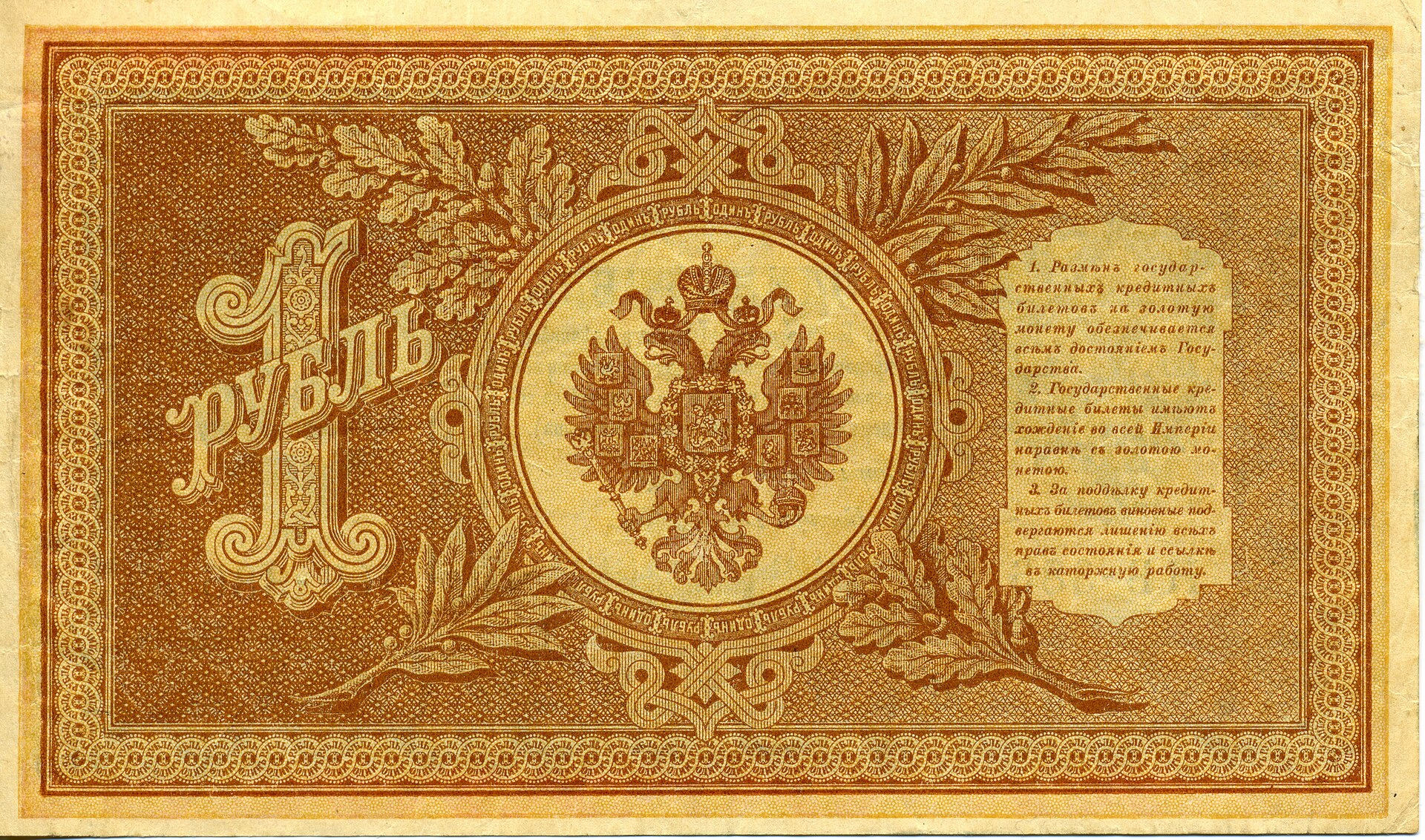
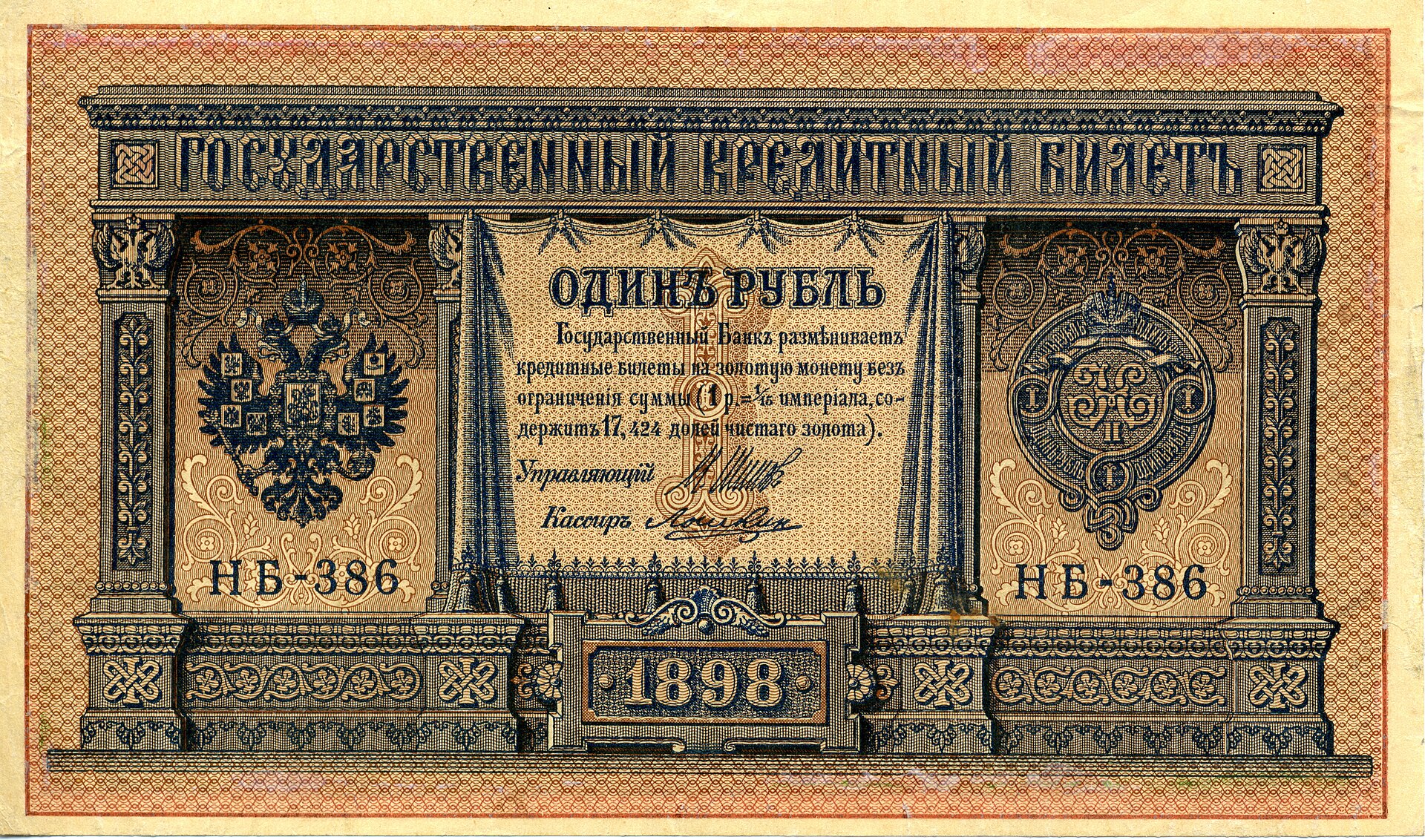
In 1898, during the monetary reform that put the rouble on the gold standard, the State Bank issued a new one-rouble credit note. Like other credit notes, it carried two signatures: the bank’s manager and a cashier. The managers changed several times over the years of issue — first E. D. Pleske, then S. I. Timashev and others. One of the cashiers was S. A. Brut. His signature appears on notes of different denominations — for example, on the 100 roubles of 1896.
The cashier who did not live to see the war
In 1914 Brut took his own life. Accounts of why differ. The best-known version says he was a passionate gambler who lost a large sum at cards, including state money. There are other explanations, but none is confirmed by documents.
Where the superstition came from
Gamblers had long believed that anything connected with a hanged man brings luck at the card table. Once the cashier’s story spread around the capital, in early 1915 the rouble bearing his signature became a charm. Magazines retold club stories about a player who, having lost everything, staked his last “Brut” rouble — and won it all back. These are legends, but the demand they created was very real.
Twenty roubles for a rouble
Dealers spread a rumour that such notes were no longer printed and had become rare. The price rose to 20–25 roubles apiece for a note with a face value of one rouble. Fakes appeared too: Brut’s signature was cut out and glued onto an ordinary note. In February 1915 the Ministry of Finance explained in the newspaper Petrogradsky Listok that the State Bank was still paying such roubles out at face value. Demand did not fall.
How to recognise a “Brut” rouble
Look at the cashier’s signature at the bottom of the front: you need the name Brut. The manager’s signature varies — in the catalogue the varieties of the 1 rouble of 1898 differ exactly by it. Owners kept the note folded in four in a wallet and hardly ever spent it, so surviving notes often show a cross-shaped fold.
The 1898 roubles stayed in circulation after the revolution too — until the autumn of 1922, when they were exchanged for new money. Over time the gamblers’ interest in “Brut” roubles gave way to collectors’ interest.


Other notes of those years are in the section on state credit notes of 1898–1899.

