40 rubles — RSFSR (1917) — Kerenka
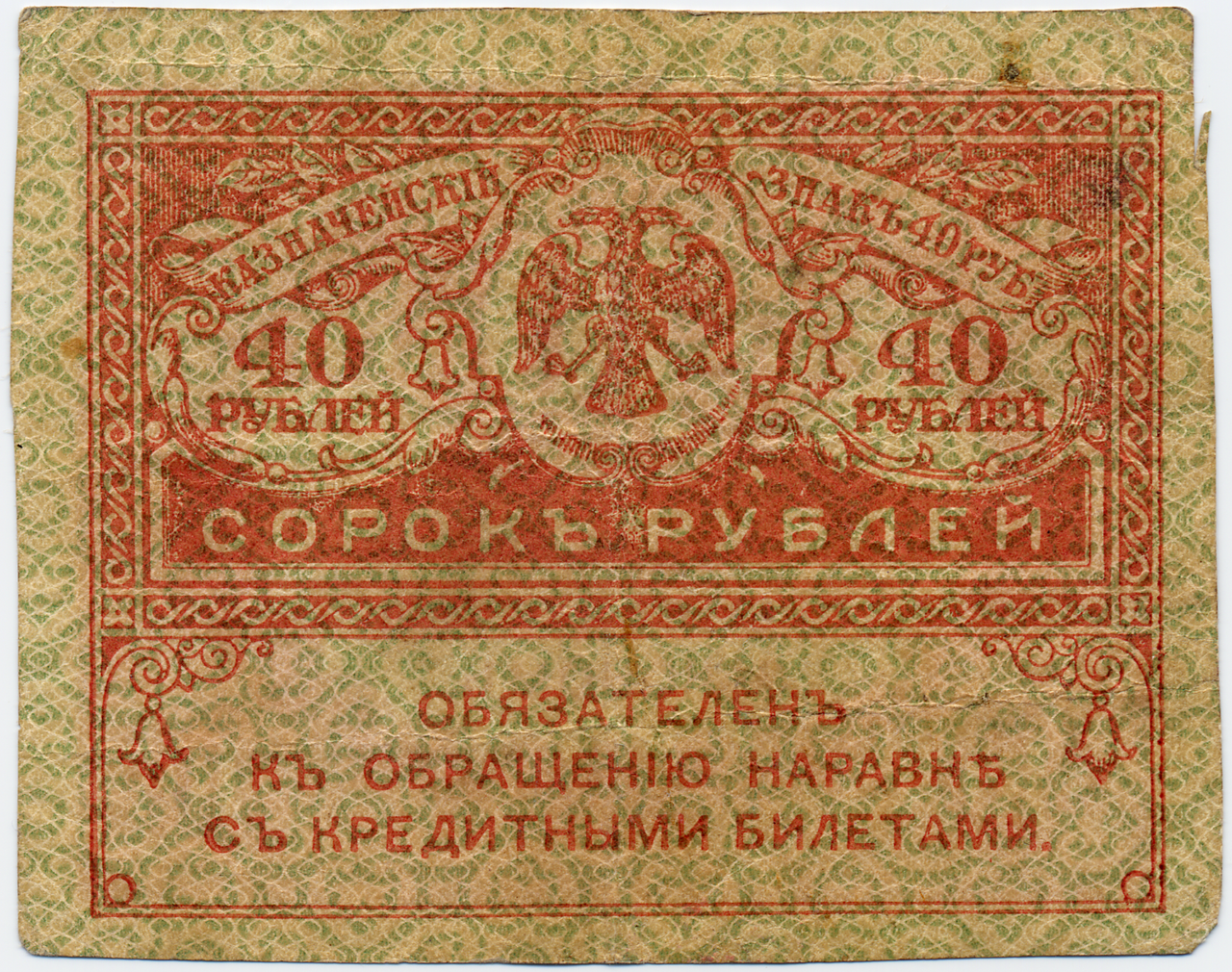
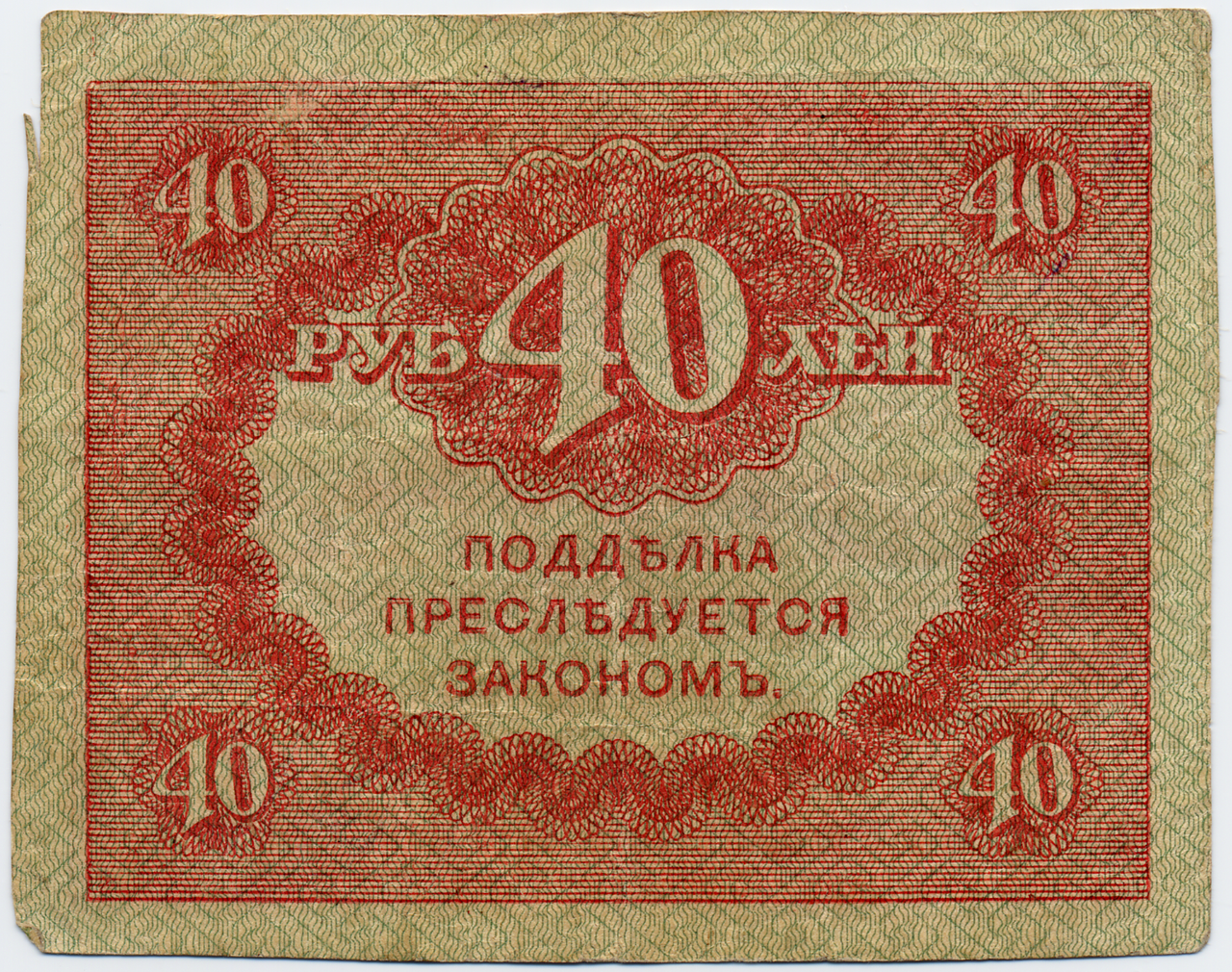
Photo: Provisional Government of Russia, via Wikimedia Commons
Kerenki
Treasury notes of the Provisional Government in 20 and 40 roubles, the "kerenki", named because the decree on the issue was signed by Kerensky. The issue began under the Provisional Government in September 1917, but most was printed under the Soviet government, the last in 1921. About 22 million roubles were issued, and the notes were exchanged until 1 October 1922. The sheets of 40 notes (5 wide and 8 long) were cut by hand, and the notes carry neither a date nor signatures. They circulated on par with credit notes. The double-headed eagle on the front is shown without the symbols of tsarist power.
Appearance
Forty-rouble treasury note, the kerenka, printed in red and pink on thick grey paper; the design is the same as on the 20-rouble note, but with the denomination "40 РУБЛЕЙ" and the figure 40 in the rosettes on the back. At the top the double-headed eagle without the symbols of tsarist power, at the bottom the inscription "ОБЯЗАТЕЛЕНЪ КЪ ОБРАЩЕНИЮ НАРАВНЕ СЪ КРЕДИТНЫМИ БИЛЕТАМИ". Size 61 × 50 mm. Copies perforated "ОБРАЗЕЦ" and "ГБСО" (the stamp of the State Bank of the Northern Region, 1919) are known, as well as copies with a watermark of six-pointed stars forming hexagons, attributed either to the government of Bulak-Balakhovich in 1919 or to a German issue of 1918.
Specifications
- Currency
- 1 ruble = 100 kopecks
- Issue type
- Circulation
- Material
- Paper
- Size
- 61.0 × 50.0 mm
- Issuer
- Expedition for the Preparation of State Papers, later Goznak
- Dominant color
- Red
- Watermark
- No
- Security thread
- No
- Demonetized
- Oct. 1, 1922
Variants
Your variety is not in the list? Propose it
Help estimate the varieties — use the “Estimate” button in a table row.
Other items of the period
-
20 rubles (1917) — Kerenka
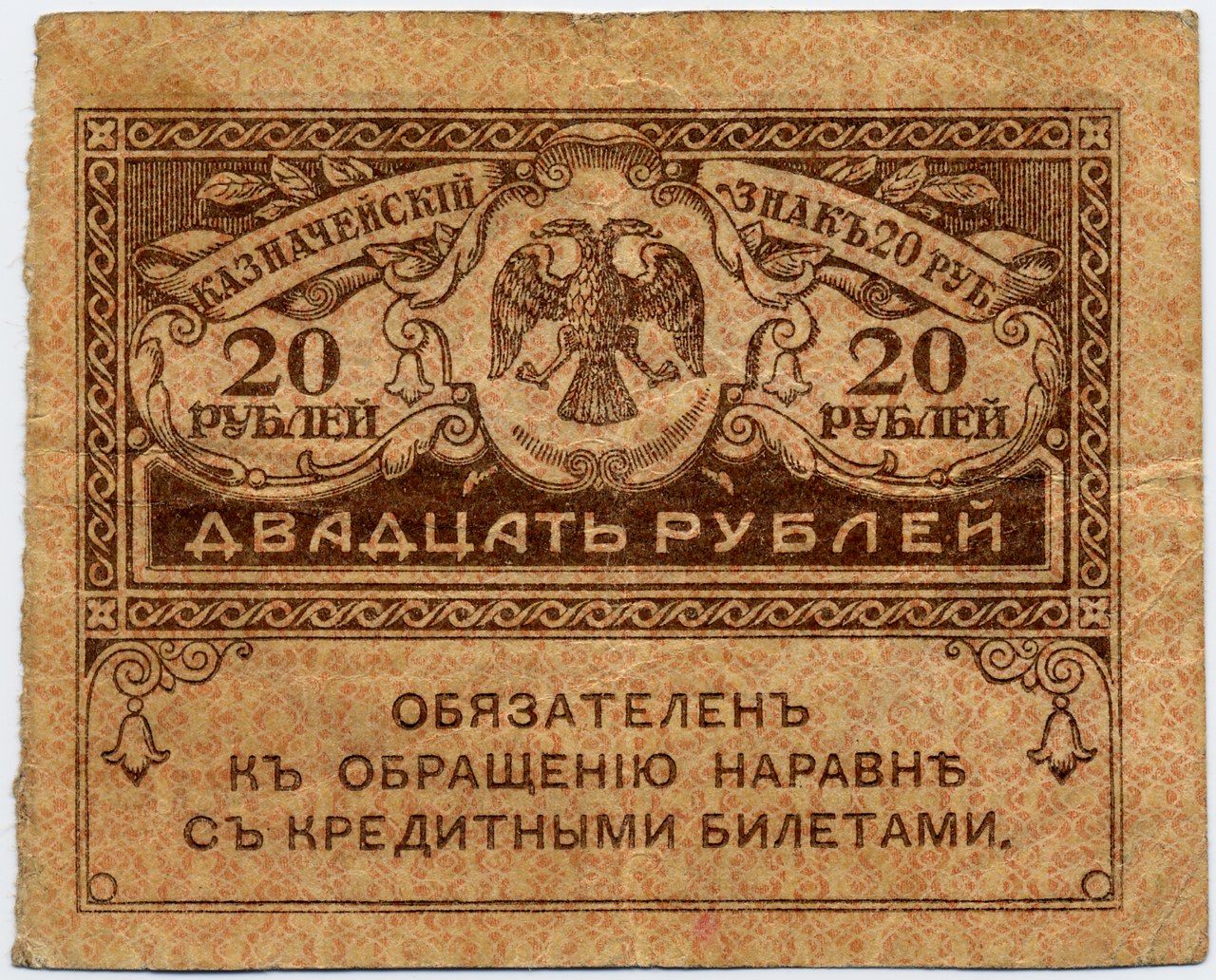
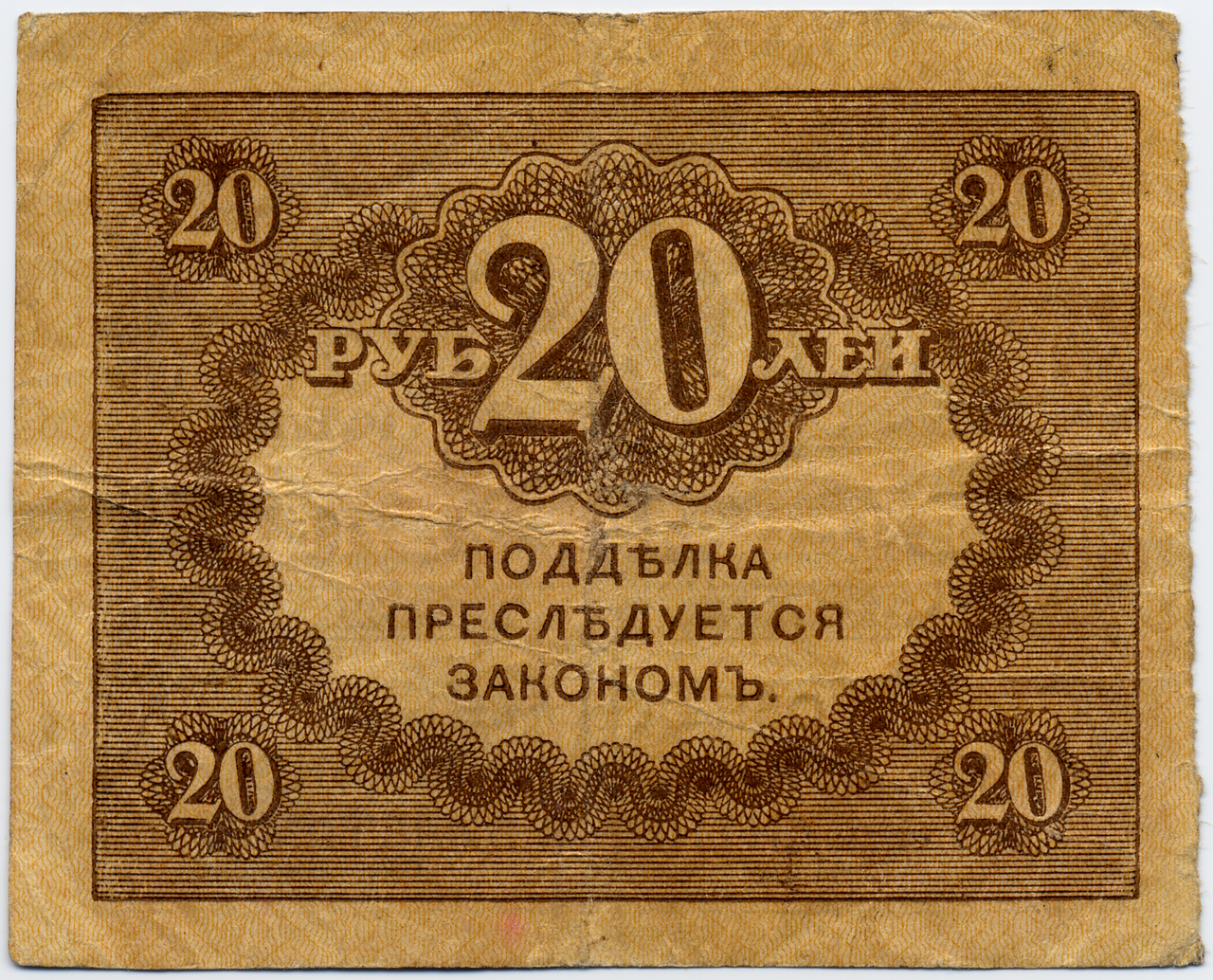
- 40 rubles (1917) — Kerenka
Report an error
Suggest an edit
Log in to suggest an edit. Log in