20 rubles — RSFSR (1917) — Kerenka
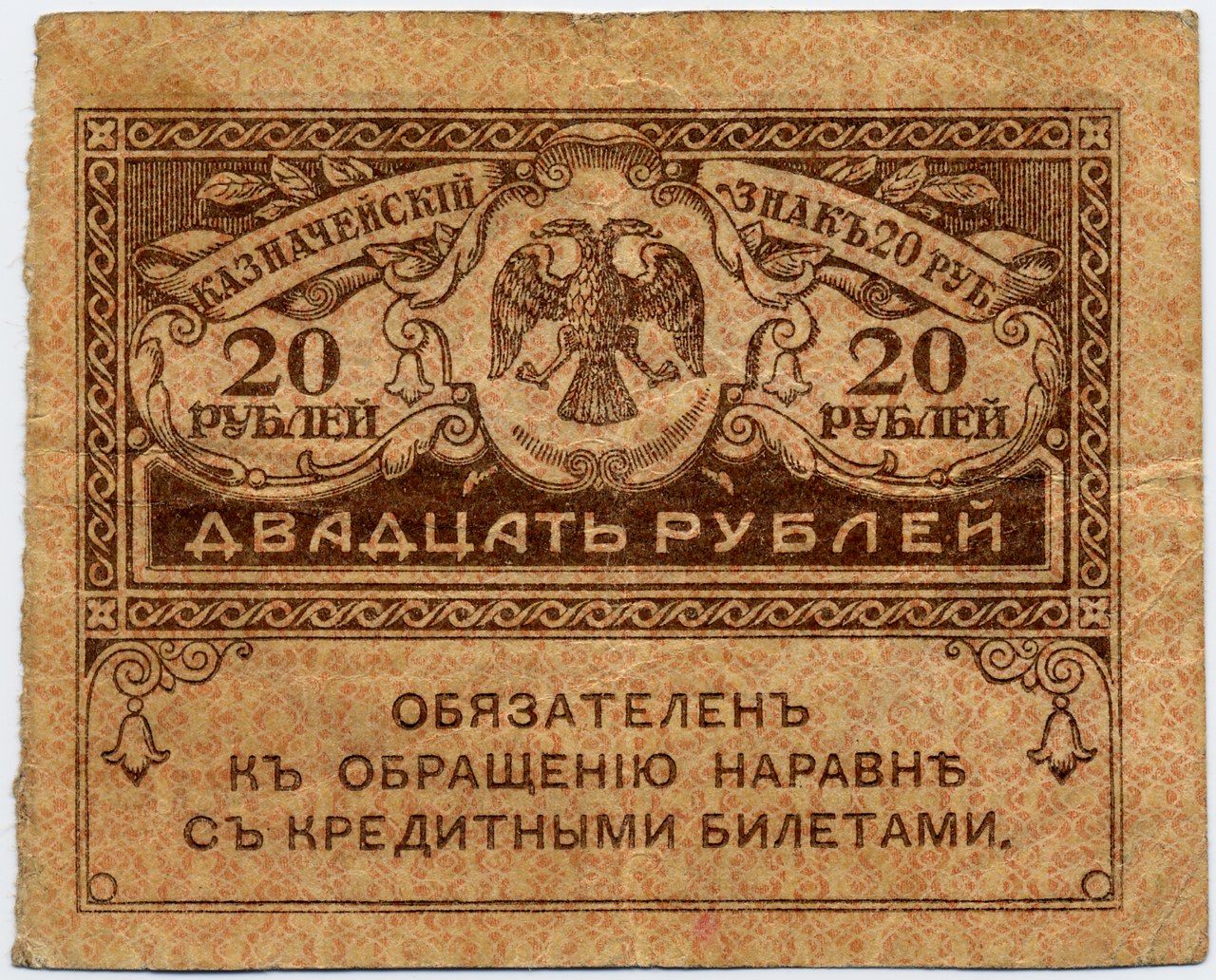
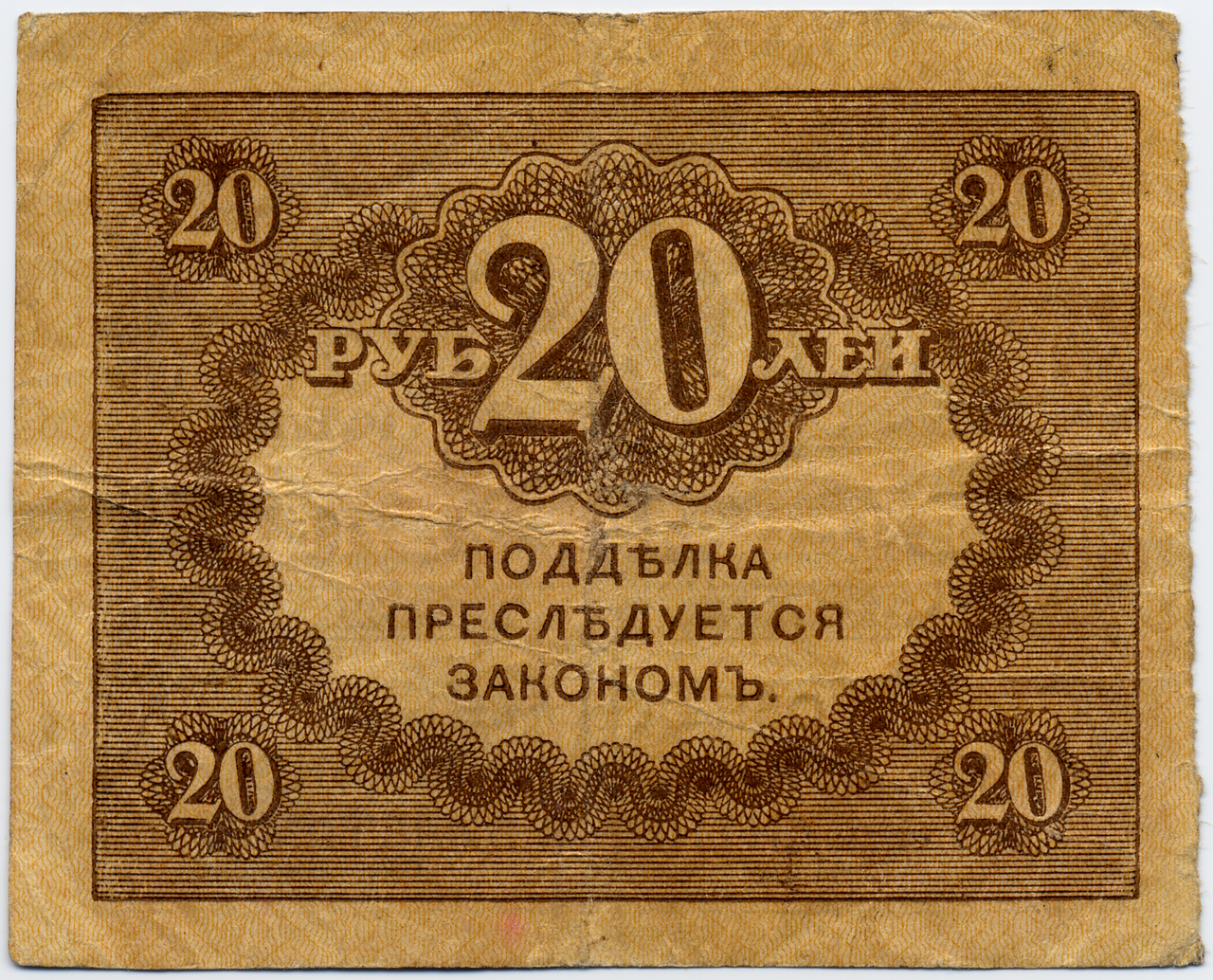
Photo: Provisional Government of Russia, via Wikimedia Commons
Kerenki
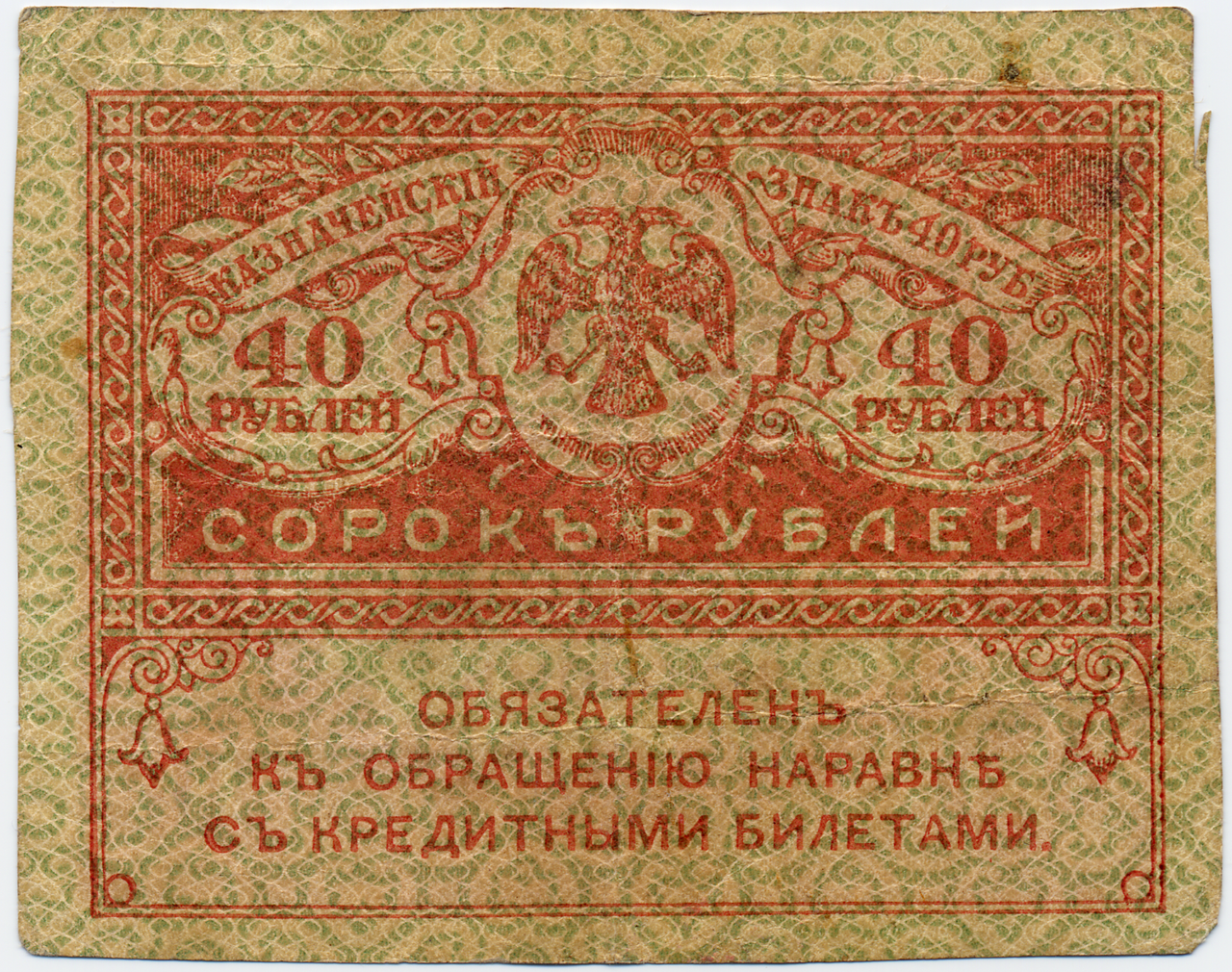
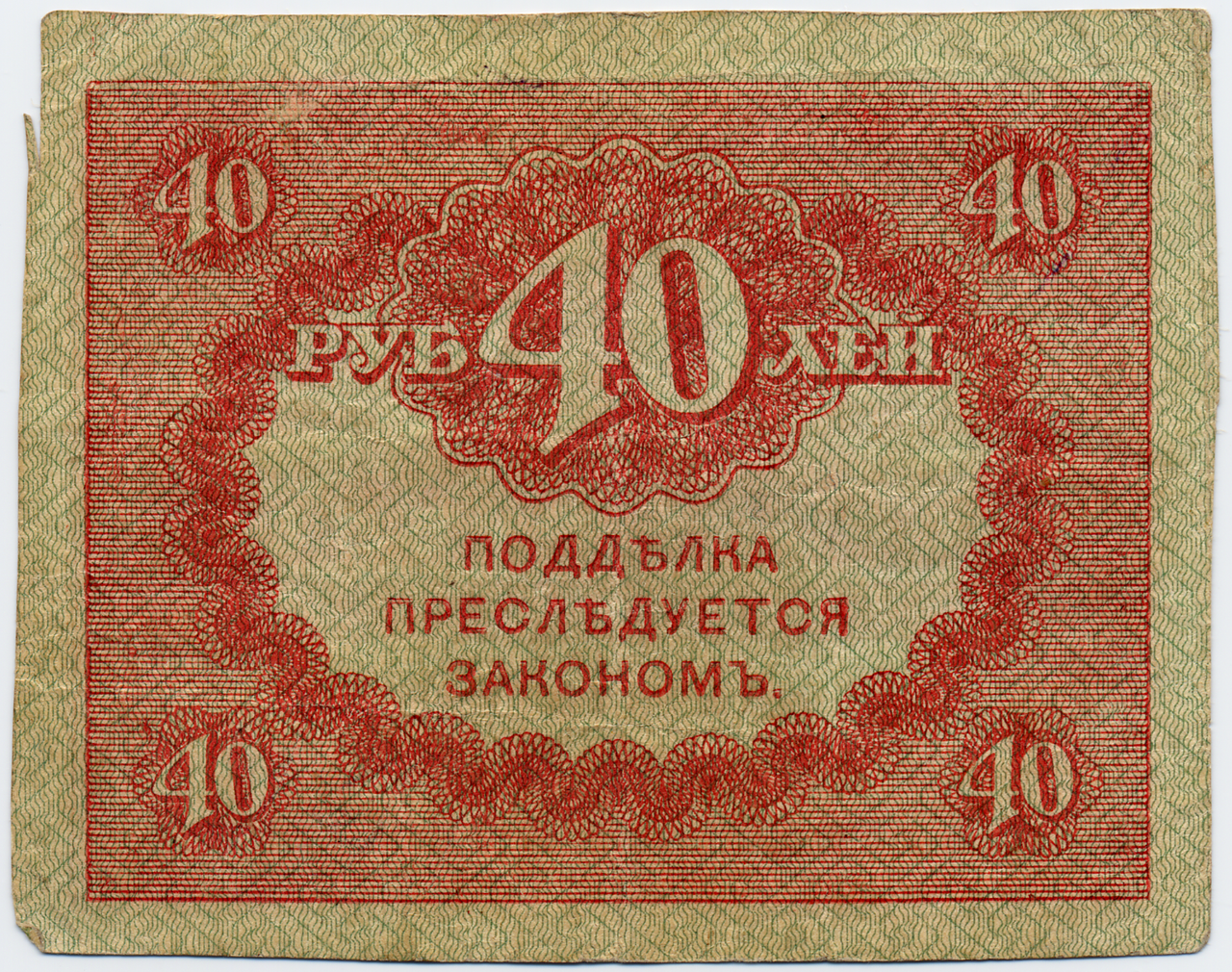
Treasury notes of the Provisional Government in 20 and 40 roubles, the "kerenki", named because the decree on the issue was signed by Kerensky. The issue began under the Provisional Government in September 1917, but most was printed under the Soviet government, the last in 1921. About 22 million roubles were issued, and the notes were exchanged until 1 October 1922. The sheets of 40 notes (5 wide and 8 long) were cut by hand, and the notes carry neither a date nor signatures. They circulated on par with credit notes. The double-headed eagle on the front is shown without the symbols of tsarist power.
Appearance
Twenty-rouble treasury note, the kerenka, printed in brown and pink on thick grey paper. A patterned ground with a rectangular frame divided in two; at the bottom among plant ornaments the inscription "ОБЯЗАТЕЛЕНЪ КЪ ОБРАЩЕНИЮ НАРАВНЕ СЪ КРЕДИТНЫМИ БИЛЕТАМИ" (obligatory in circulation on par with credit notes). At the top in a figured frame the double-headed eagle without the symbols of tsarist power, at the sides the denomination "20 РУБЛЕЙ". The back has a geometric ornament with guilloche rosettes holding 20 in the corners and an oval of a wavy line with the words "ПОДДЕЛКА ПРЕСЛЕДУЕТСЯ ЗАКОНОМЪ". Size 61 × 50 mm. Usually no watermark, only a pattern of wavy lines with dots in the paper. Copies perforated "ОБРАЗЕЦ" (demonstration copies, never in circulation) and "ГБСО" (the stamp of the State Bank of the Northern Region, 1919) are known.
Specifications
- Currency
- 1 ruble = 100 kopecks
- Issue type
- Circulation
- Material
- Paper
- Size
- 61.0 × 50.0 mm
- Issuer
- Expedition for the Preparation of State Papers, later Goznak
- Dominant color
- Brown
- Watermark
- No
- Security thread
- No
- Demonetized
- Oct. 1, 1922
Other items of the period
- 20 rubles (1917) — Kerenka
-
40 rubles (1917) — Kerenka
Report an error
Suggest an edit
Log in to suggest an edit. Log in