100 rubles — Russian Empire (1841) — Deposit note
Pick# A30
Log in to share a photo
Watermark
There is no watermark photo yet. Share a watermark photo
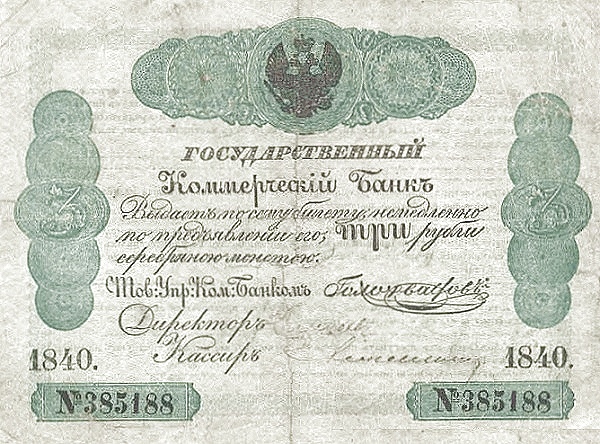
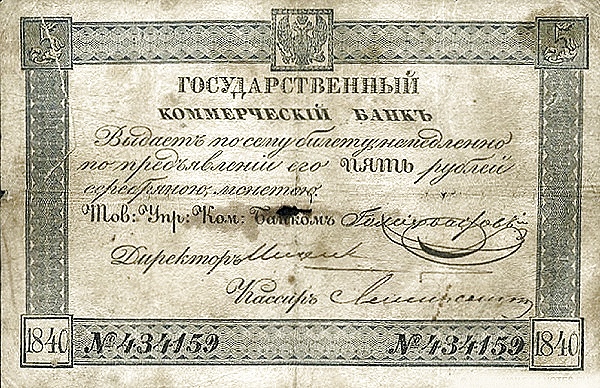
Deposit notes and the credit note of 1840–1841
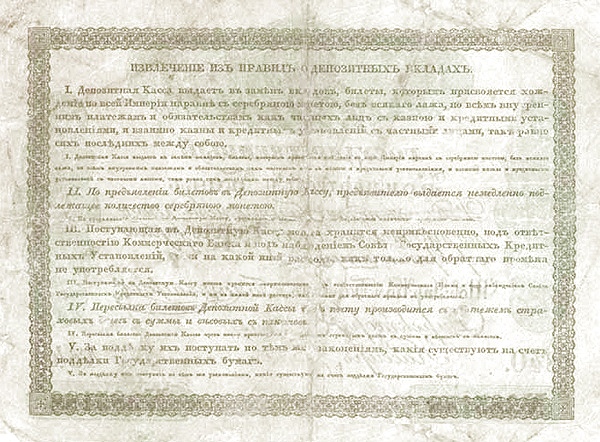
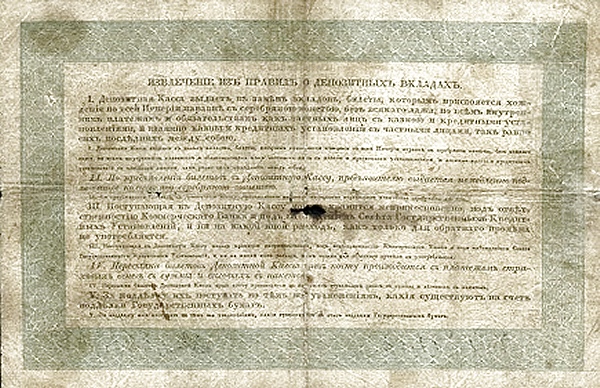
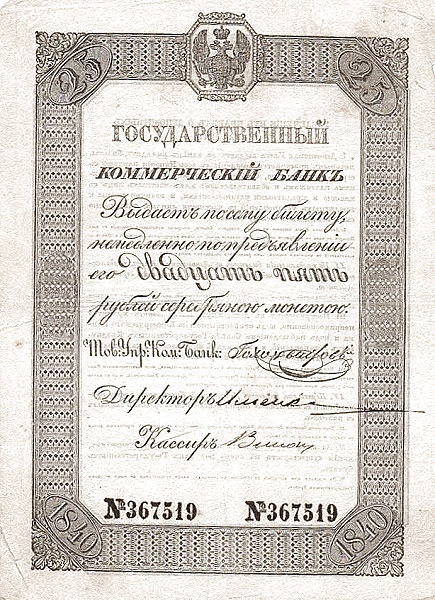
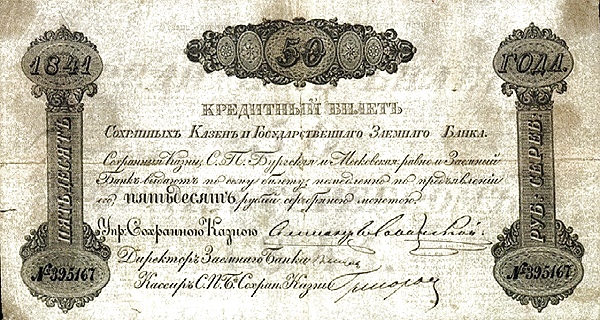
The first steps of Kankrin's currency reform. The deposit notes of the State Commercial Bank (3, 5, 10, 25, 50 and 100 roubles) were issued in 1839–1843 and were fully backed by silver coin: the bank redeemed them without limit. They were meant to replace the depreciated assignats, whose rouble was worth about thirty kopecks in silver. The signature of the deputy manager of the bank was printed as a facsimile, while the director and the cashier signed each note by hand. In 1843 the deposit notes were exchanged one for one for the new State Credit Notes. The 50-rouble credit note of 1841 of the Savings Treasuries and the State Loan Bank was the first credit note, only partly backed by silver; few were made and 219 examples are known.
Appearance
One-hundred-rouble deposit note of 1841, a horizontal note in a multicolour rectangular frame. The upper circles carry the word "СТО" (hundred), the lower ones the year "1841"; a circle with the figure 100 stands at the bottom centre and one with the arms above it. A very rare variant with a red frame is known. A hand-written promise to pay in silver coin and the arms of the 1830 pattern; the back carries an extract from the rules on deposits. Size 178 × 137 mm, in circulation from 18 June 1841.
Specifications
- Period
- Deposit and credit notes
- Currency
- 1 ruble = 100 kopecks
- Issue type
- Circulation
- Material
- Paper
- Size
- 178.0 × 137.0 mm
- Issuer
- Expedition for the Preparation of State Papers
- Watermark
- Yes
- Security thread
- No
Variants
Your variety is not in the list? Propose it
Help estimate the varieties — use the “Estimate” button in a table row.
Other items of the period
Report an error
Suggest an edit
Log in to suggest an edit. Log in